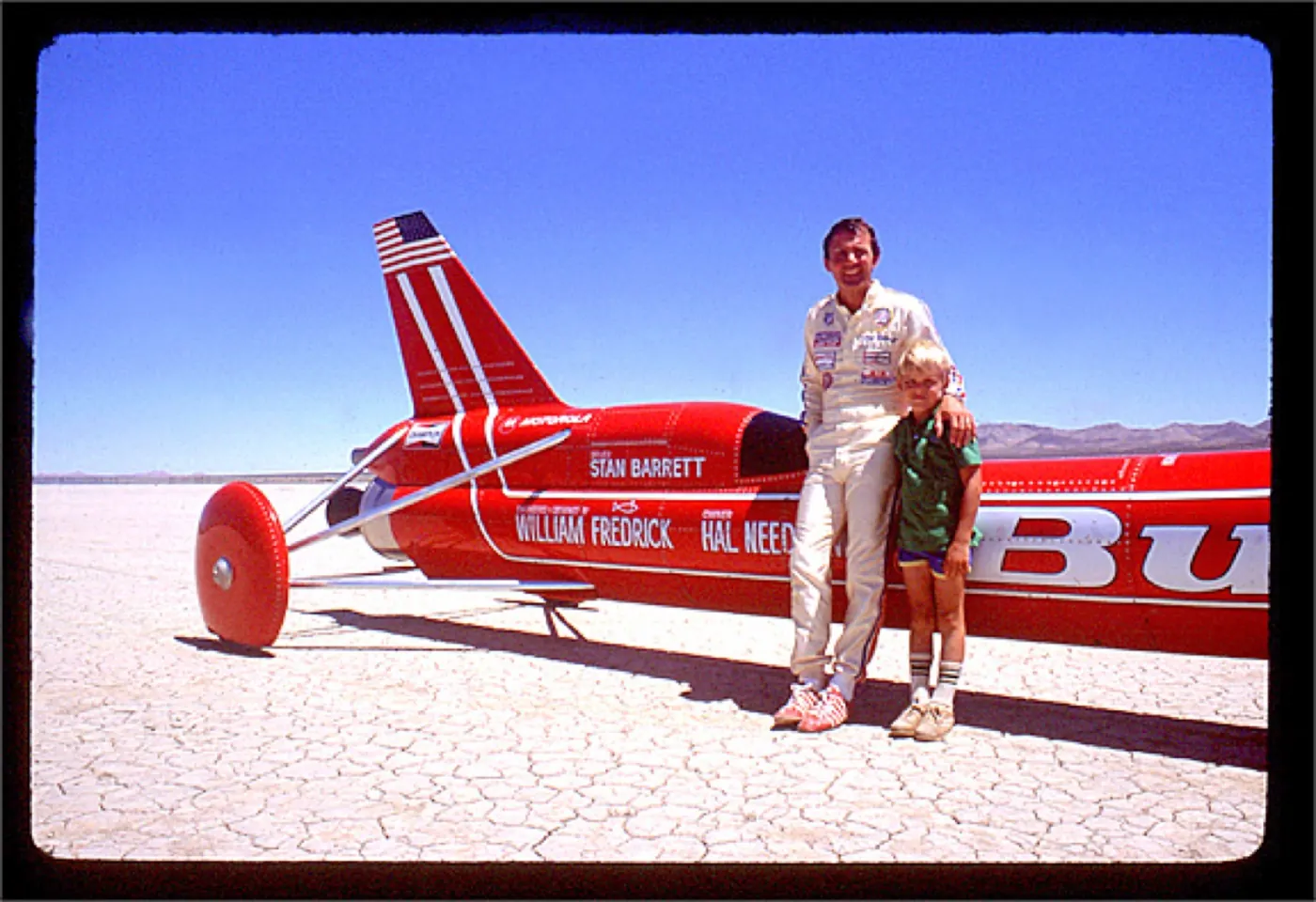
The Father
Stan Barrett
Hollywood's top stuntman, and the first person to break the speed of sound on land. Mach 1.01, 1979.


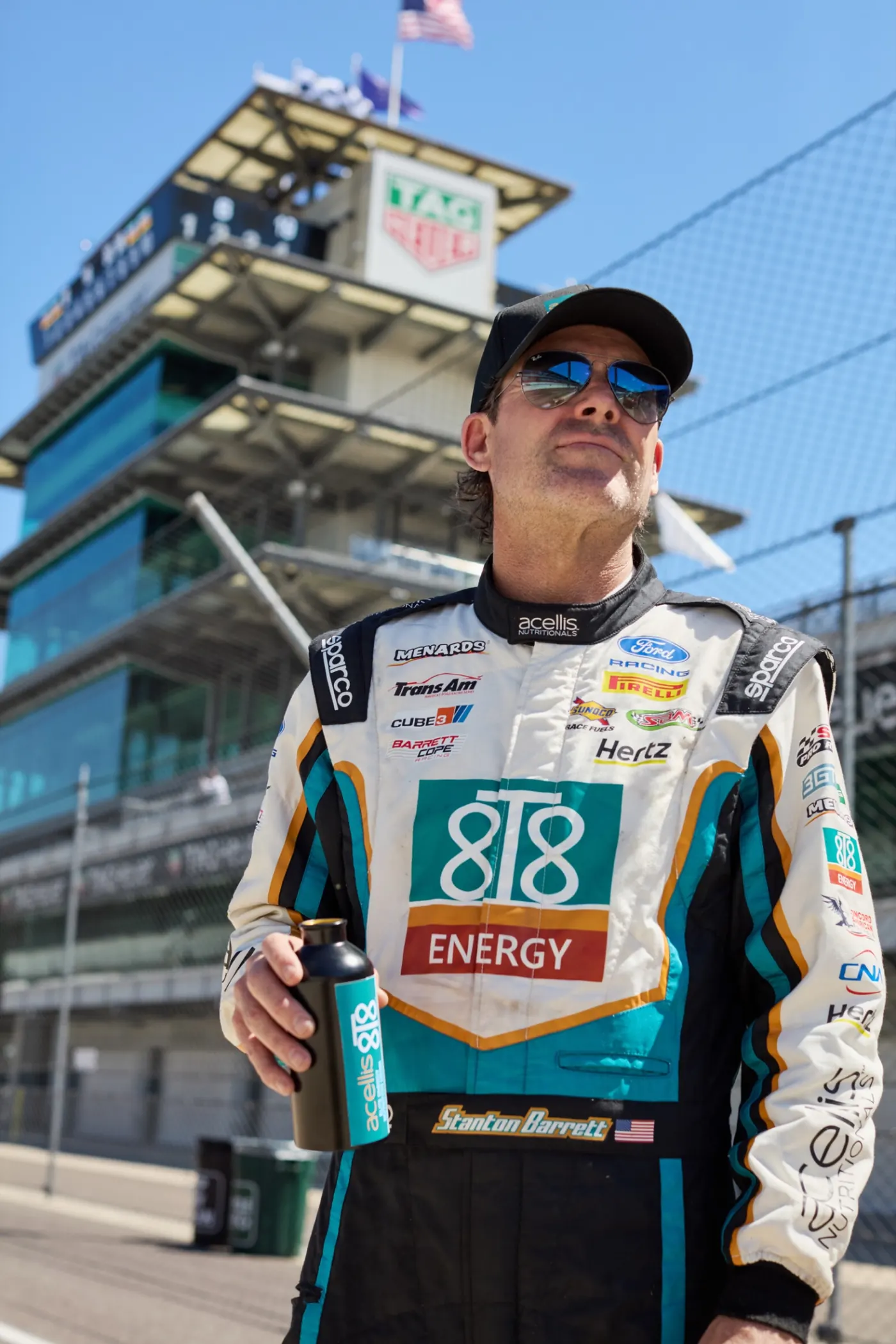
A life built on velocity, family, and vitality.
00 The Opening Lap
Stanton Barrett has built a life around motion. He has raced in NASCAR, IndyCar, and Trans Am, earned more than 300 film and television credits as a stunt performer and director, coached drivers, built a motorsports team, and created an award-winning California wine label. Away from the racetrack and movie set, he skis, rides motocross, flies his own plane, is a gourmet cook, and supports charitable causes, including the Team USA Olympic bobsled program.
That range is rooted in family. His father, Stan Barrett, piloted the Budweiser Rocket Car. His mother, Penny McCoy, became a World Championship Skiing Medalist at sixteen. His grandparents, Dave and Roma McCoy, built a remarkable life around Mammoth Mountain.
Here, Barrett reflects on those influences, his return to Trans Am in the Acellis 8T8 Ford Mustang, and the discipline behind a long career.
01 The Family Behind the Drive
Hollywood's top stuntman, and the first person to break the speed of sound on land. Mach 1.01, 1979.
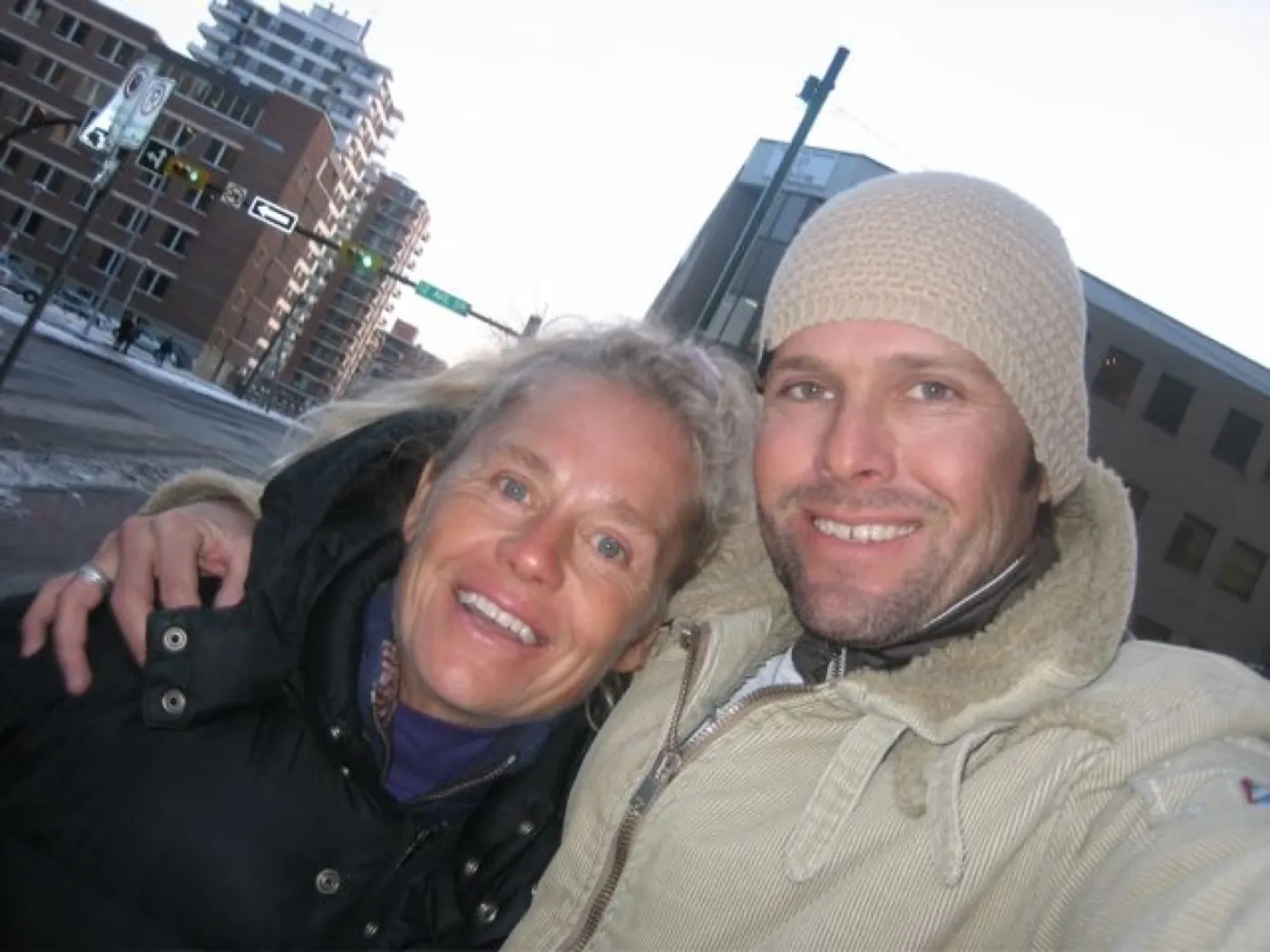
World Championship skiing medalist at sixteen. Four-time Ironman. World champion mountain-bike racer.
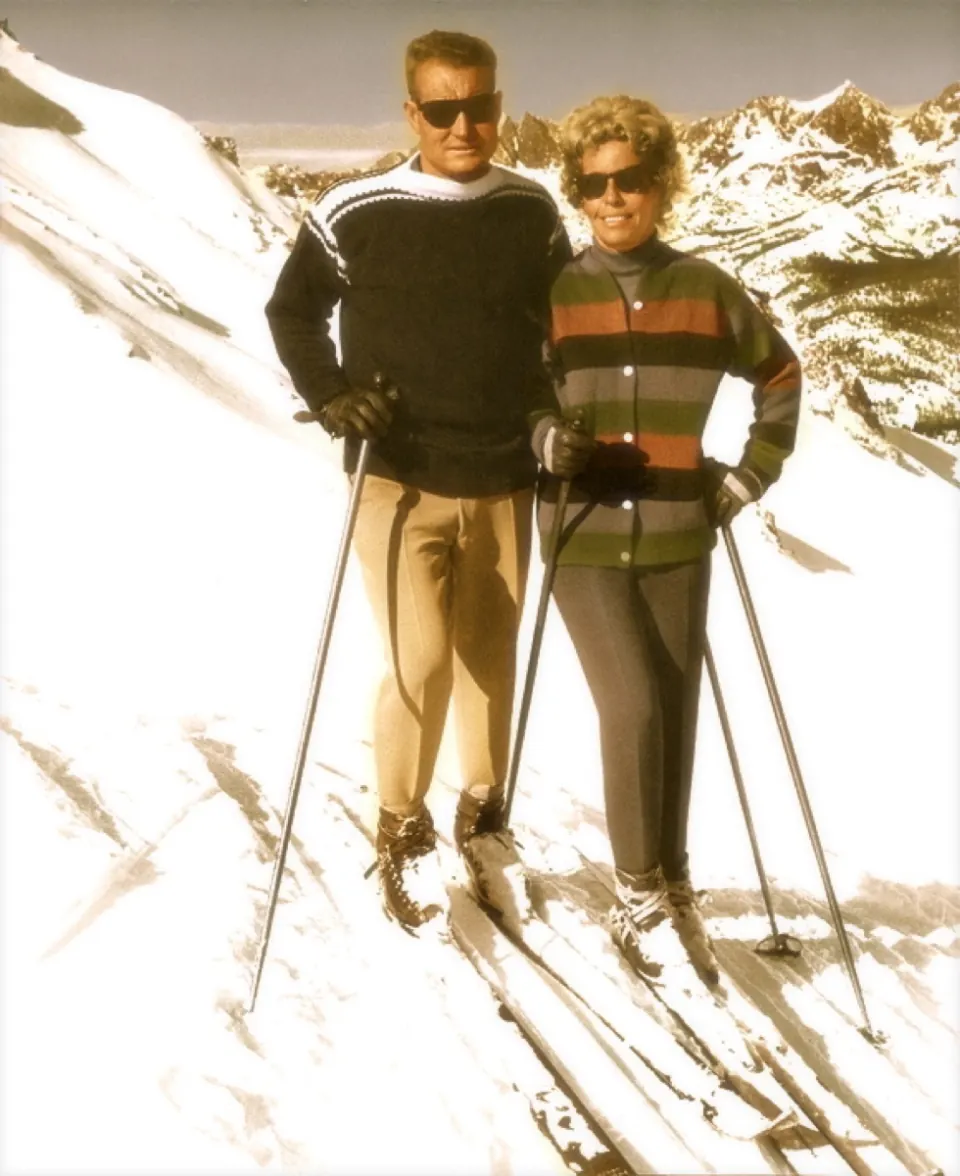
Built Mammoth Mountain into North America's greatest ski resort. Married 80+ years; lived to 104 and 101.
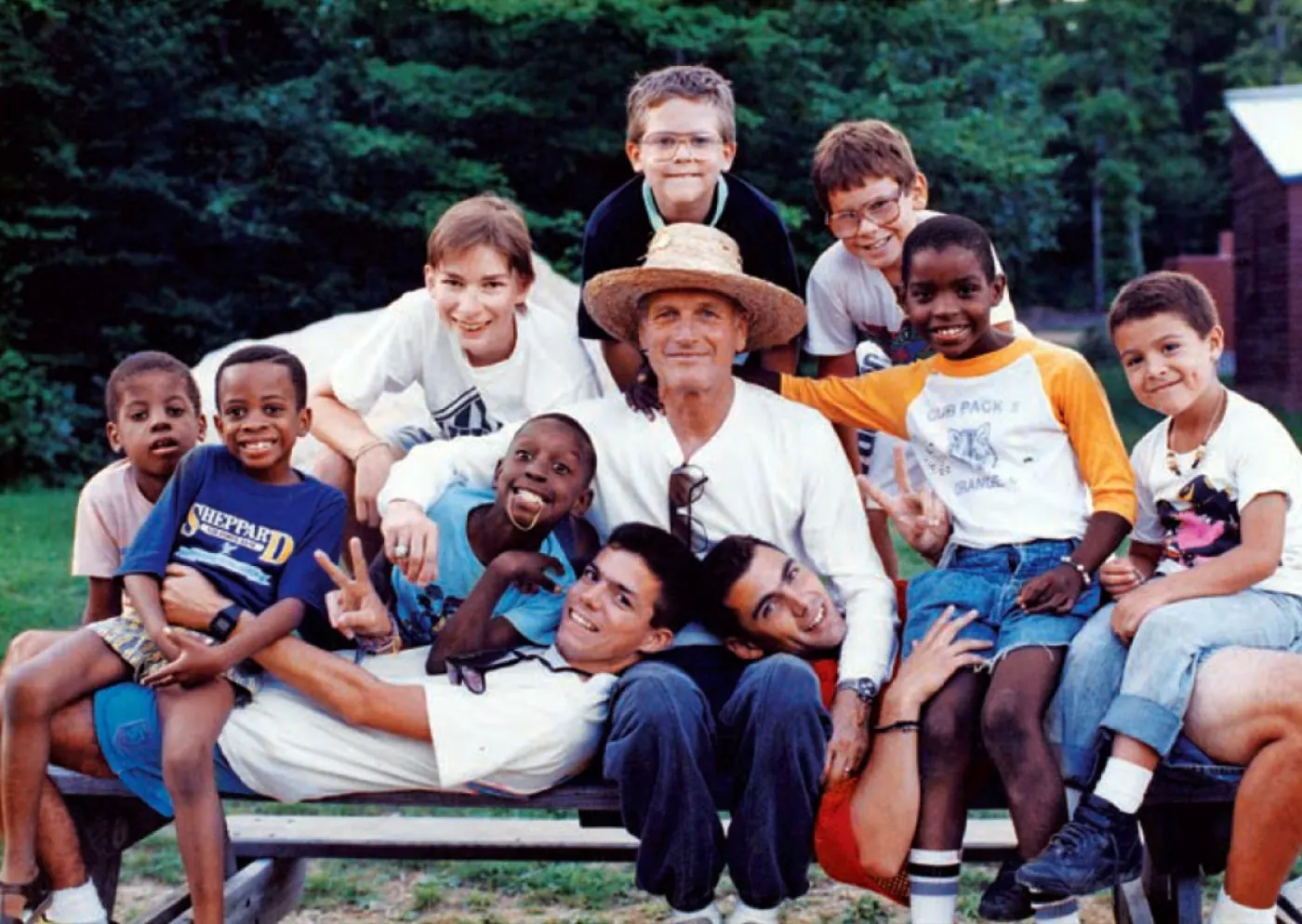
Actor, racer, philanthropist. Mentor and lifelong friend whose humility Stanton still leans on.
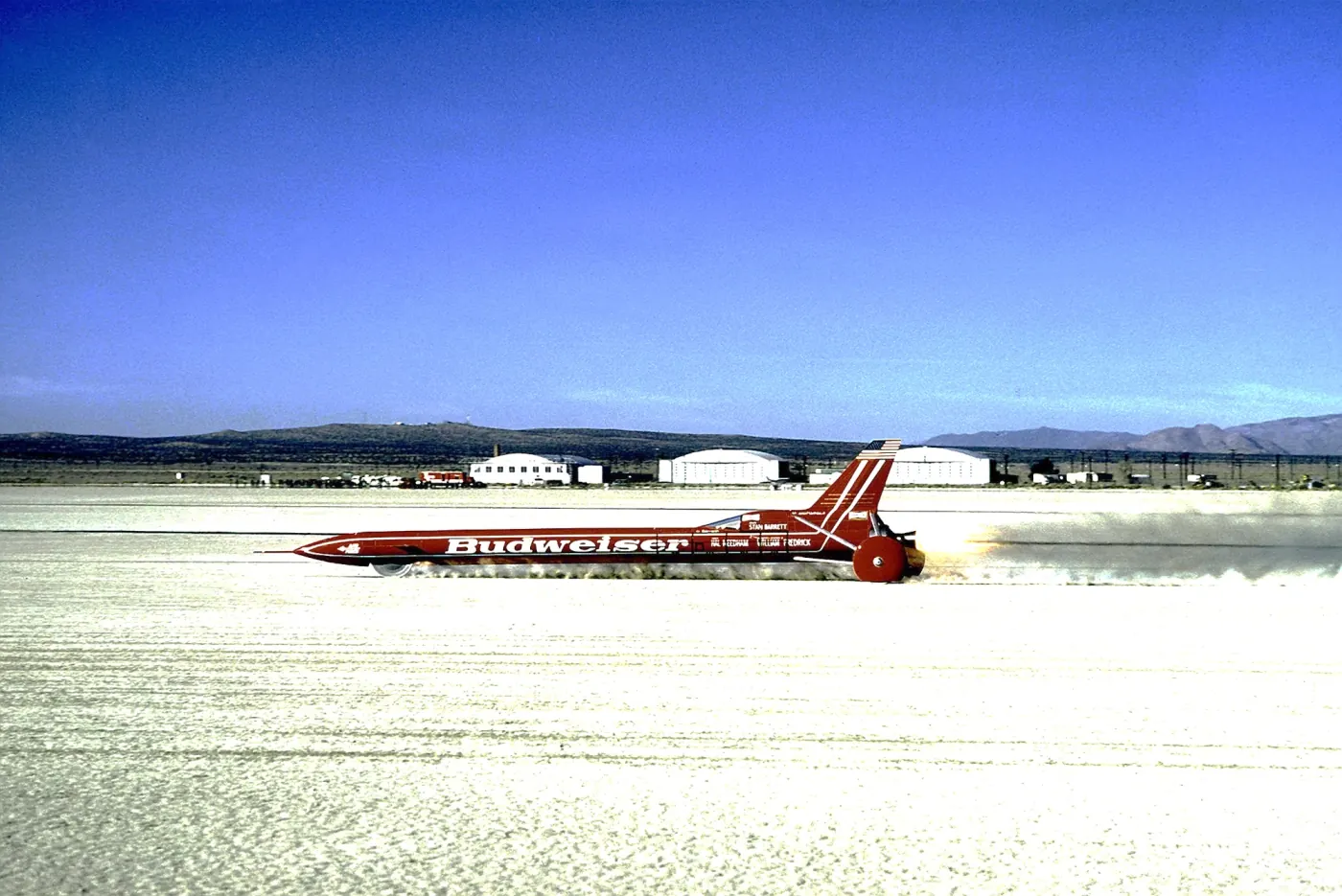
Your father, Stan Barrett who among many things, drove the Budweiser Rocket Car to Mach 1.01, and became the first person to break the speed of sound on land in 1979. What did growing up with someone willing to push himself to that edge teach you about fear and focus?
It was difficult to follow in his footsteps and grow up with someone so driven, successful, and strict. He taught me to understand risk, focus on details, and study the points where something could fail. All of that helps create a strategic mindset and a plan for success. When it comes to fear, respect it, but do not let it stop your progress. Being fearless does not mean ignoring failure. It means understanding the risks, doing everything you can to reduce them, and still having the confidence to move forward.
Being fearless does not mean ignoring failure. It means understanding the risks, doing everything you can to reduce them, and still having the confidence to move forward.Stanton Barrett
What is something your father told you that you only fully understood once you were behind the wheel yourself?
Never give up, and remember that there is more to life than being behind the wheel. He gave us the confidence to push forward and attempt things we did not think we could do, even if we crashed over and over while trying. He also believed in tough love, which I did not fully understand until I was older.
Paul Newman was a close friend of your father, then your godfather, mentor, and friend. What lesson from him stays with you?
His humility, kindness, and generosity toward people in need. Paul had a passion for helping others, especially children facing serious illness. I still draw from his love of life, compassion, the arts, and auto racing. Most of all, I lean on the unique friendship we had.
Your mom, Penny McCoy, became a World Championship medalist at just sixteen, winning bronze in slalom at the 1966 World Championships. What did her example teach you about preparation, discipline, and sustaining excellence?
My mom has been a serious athlete since she was a young girl. The training ethic my grandfather instilled in her taught her valuable lessons in sports and in life, and those traits were passed down to me. Together with my dad they had a strong focus on nutrition and shared the same work ethic to sports. My mom went on to compete in four Ironman triathlons, including two in Kona, an invitational in Japan, and one in New Zealand. She was a top contender in her age group and overall. She also became a world champion in cross-country mountain bike racing in her age group and was one of the top women across age groups at the time. My parents and grandparents all influenced how I prepare and stay disciplined. Each had a different approach, and I tried to take the best from all of them.
Your grandparents, Dave and Roma McCoy, built a remarkable life around Mammoth Mountain in California's Eastern Sierra. Dave founded and developed Mammoth Mountain into one of North America's most celebrated ski destinations, coached generations of elite American skiers, and was inducted into the U.S. National Ski Hall of Fame. What did their example teach you about ambition, community, and building something that lasts?
Both of my grandparents were amazing people. My grandfather was a true genius with engineering, business, and people. He grew up poor and raised his family through difficult years, then built what became the largest and most successful ski resort in North America. Most of all, he gave back to the community and his employees, helping build the towns of Mammoth and Bishop. They gave land and loaned money to passionate entrepreneurs who could provide what customers and the community needed. He was another extremely humble man, like Paul. My grandmother brought stability to the family and supported my grandfather's endeavors. They were married for more than 80 years and lived long, healthy, active lives. Roma reached 101 and Dave reached 104.
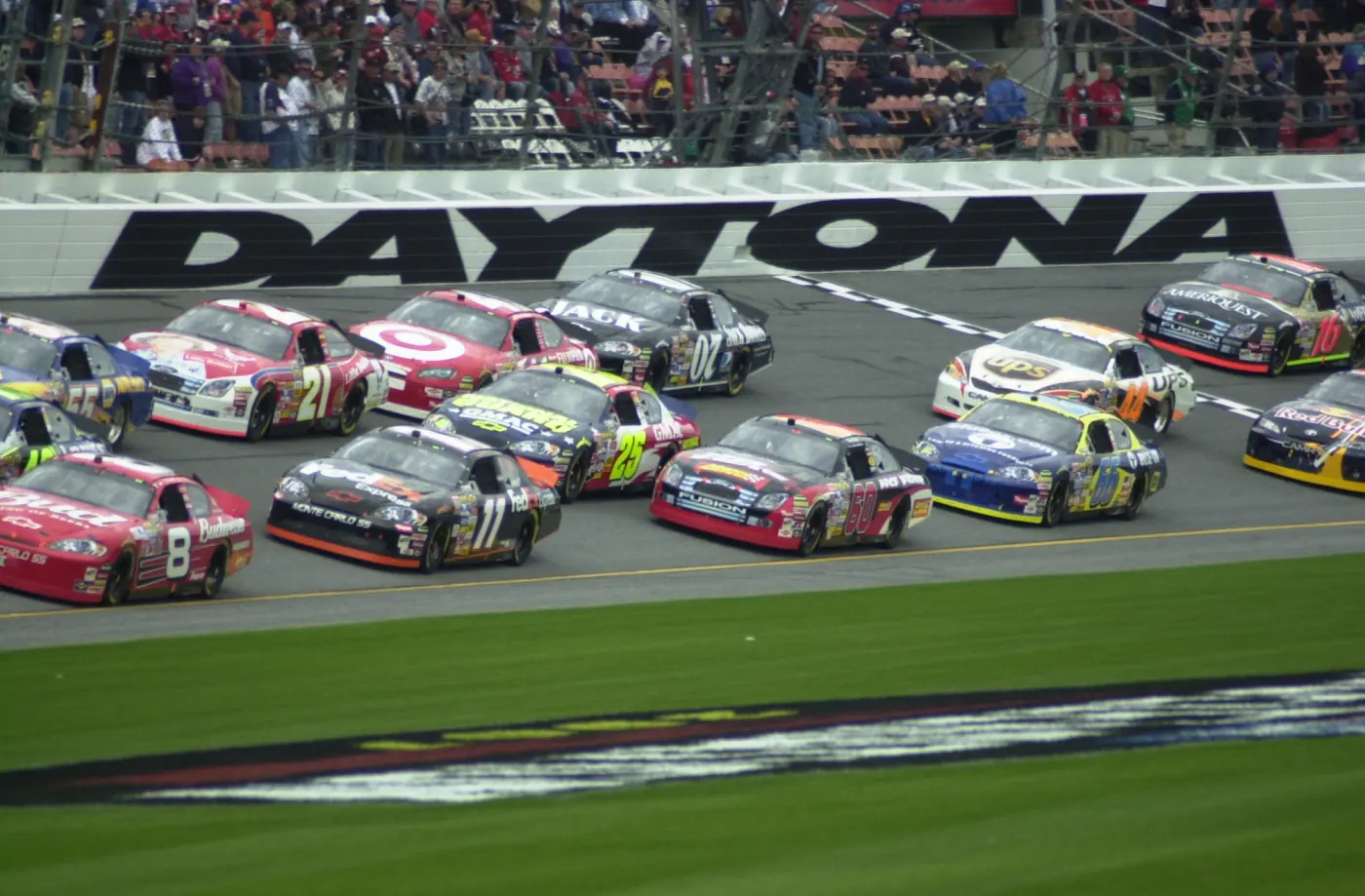
“I also remember how amazing it felt to be at Daytona for the first time and to race there.”
02 Learning to Race
How did you first find your way into racing?
I became interested at a very young age because my dad was primary stuntman for Paul Newman and Burt Reynolds, and Paul raced extensively. I went to IndyCar races with Paul and my dad. Then my dad drove the renowned Budweiser Rocket Car and went Mach 1, setting a new land-speed record of 1,191 km per hour (Mach 1.01 / 739.666 mph). After that, Paul, Hal Needham, and Burt Reynolds started a NASCAR team, and my dad drove for them. I raced motorcycles and skied downhill, but I expected to fly jets in the Air Force, not race cars. Then I went to racing school at sixteen and realized it was a good fit. I raced go-karts and worked in race shops, including a summer with Richard Childress. He got me into a sportsman car. I learned the mechanics and worked hard building cars so I could race them.
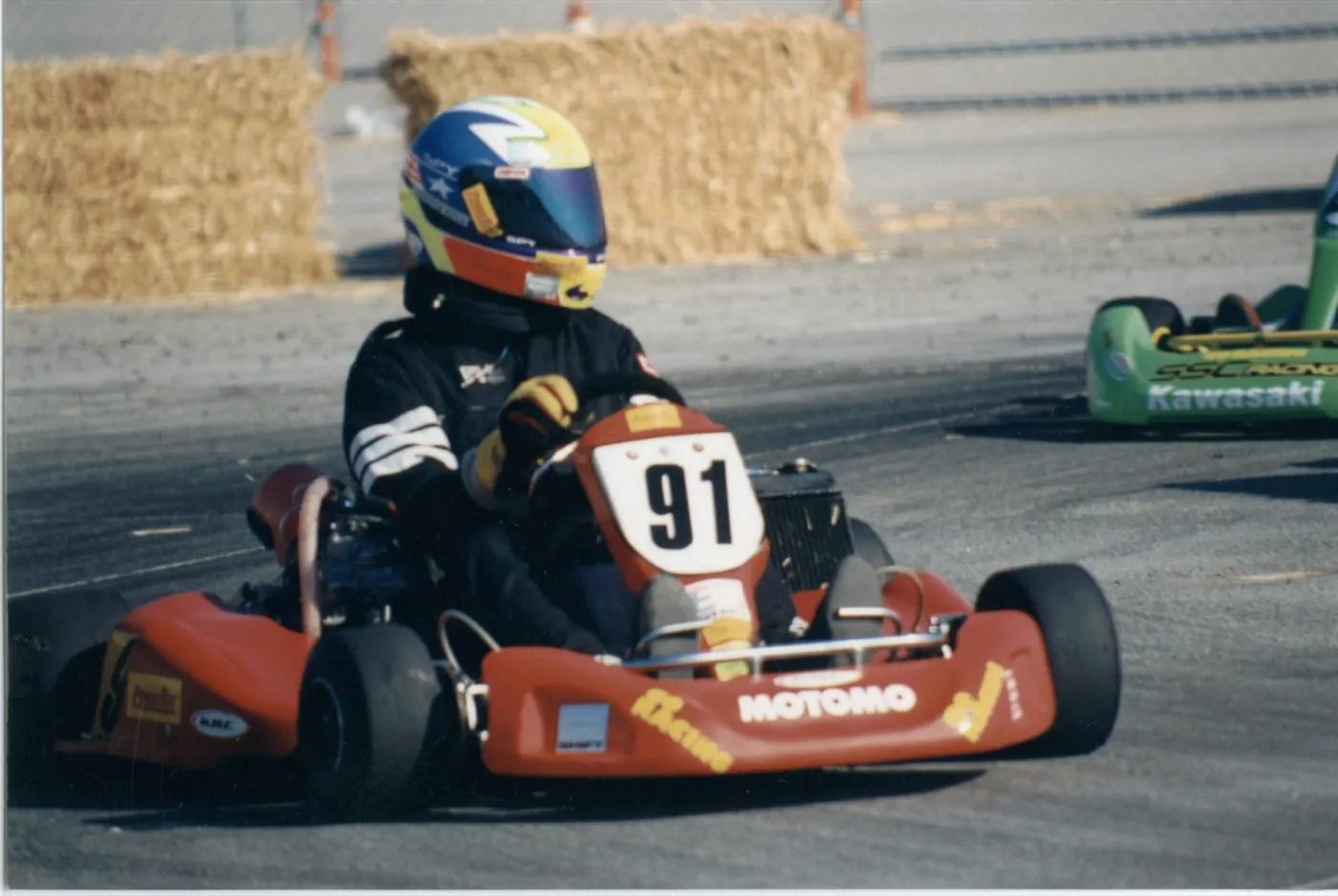
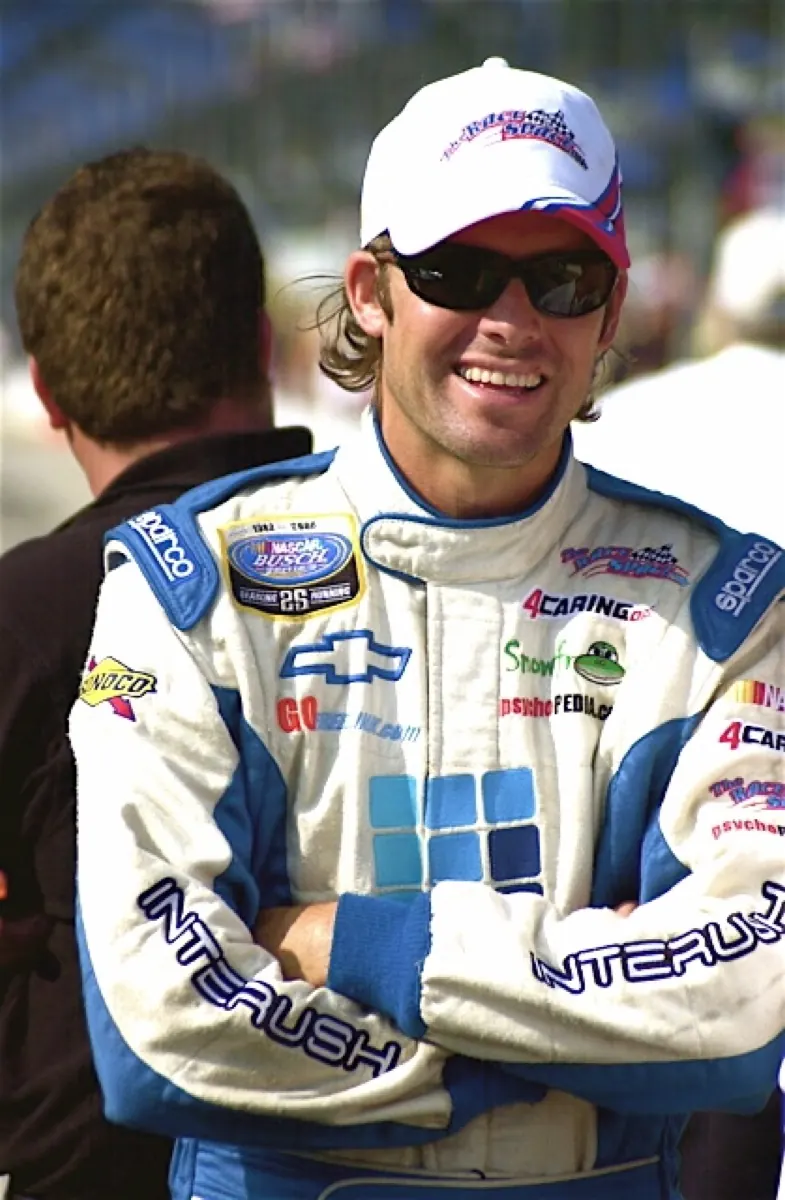
What kept pulling you through NASCAR, ARCA, vintage racing, coaching, and team ownership?
I have always loved race cars, especially the complexity of building them and finding ways to make them better. I raced in the NASCAR Cup Series, the O'Reilly Series, ARCA Menards, and other series. A friend introduced me to vintage racing, and I loved the history of the cars and the grassroots passion of the drivers. That evolved into coaching new drivers, working with experienced drivers, and helping other people get started. Being asked to coach and develop drivers helped bring me back. It is a lot of work, but coming to the track is always fun. I still love the puzzle of making a car fast, then finding a way to make it faster.
I still love the puzzle of making a car fast, then finding a way to make it faster.Stanton Barrett
You have raced in NASCAR, IndyCar, and Trans Am. How do the challenges compare from a builder's and driver's perspective?
That is complicated. My IndyCar experience was with a new team that struggled, but the car was super fun to drive. NASCAR is enormously complex. IndyCar has certain parts supplied by the manufacturer, and teams build around them. In stock cars, there are so many variables involved in making the car run well. When IndyCar drivers move to stock cars, they often have a harder time than stock car drivers moving to IndyCar. All of them are fun with a good car. I raced IndyCar a few times and really enjoyed it. If I had a truly good IndyCar, I would probably go race it.
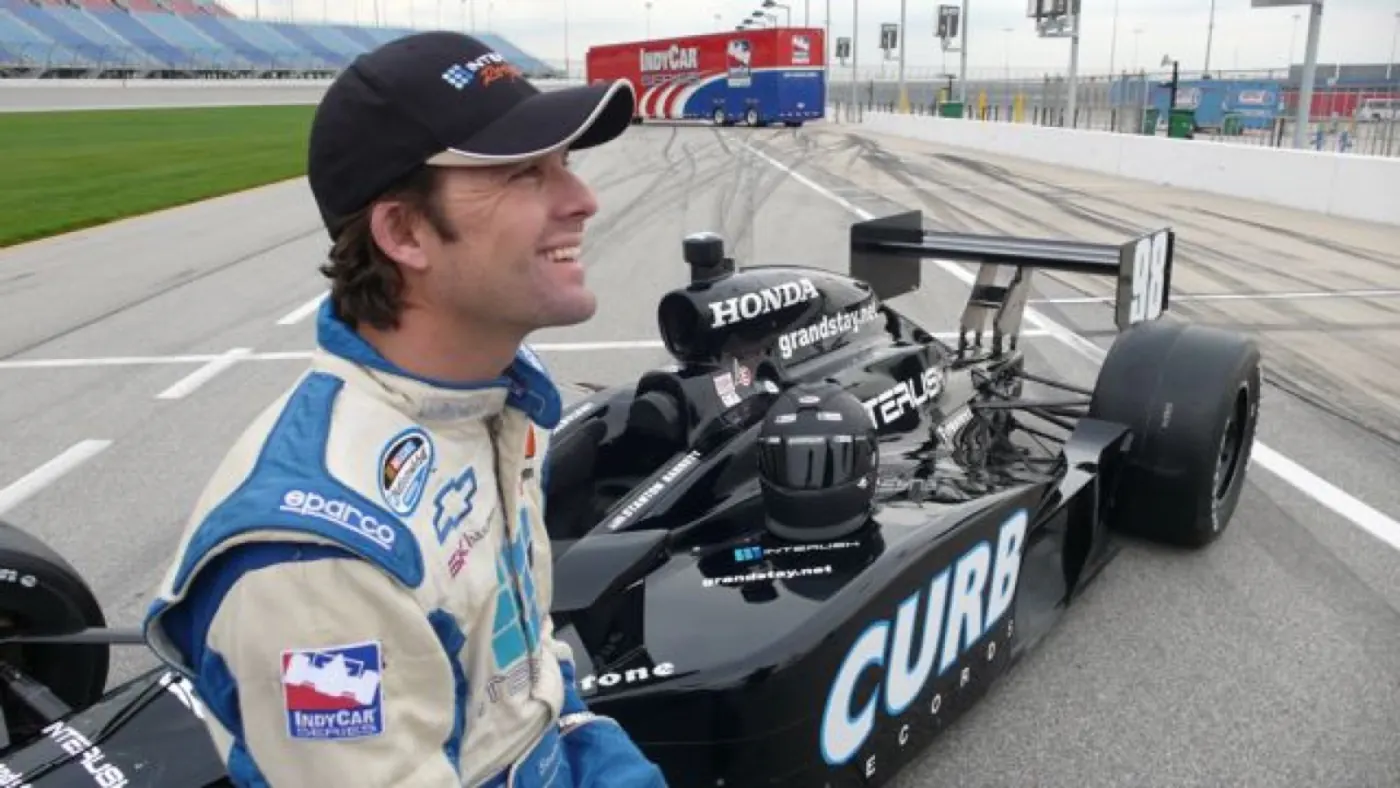
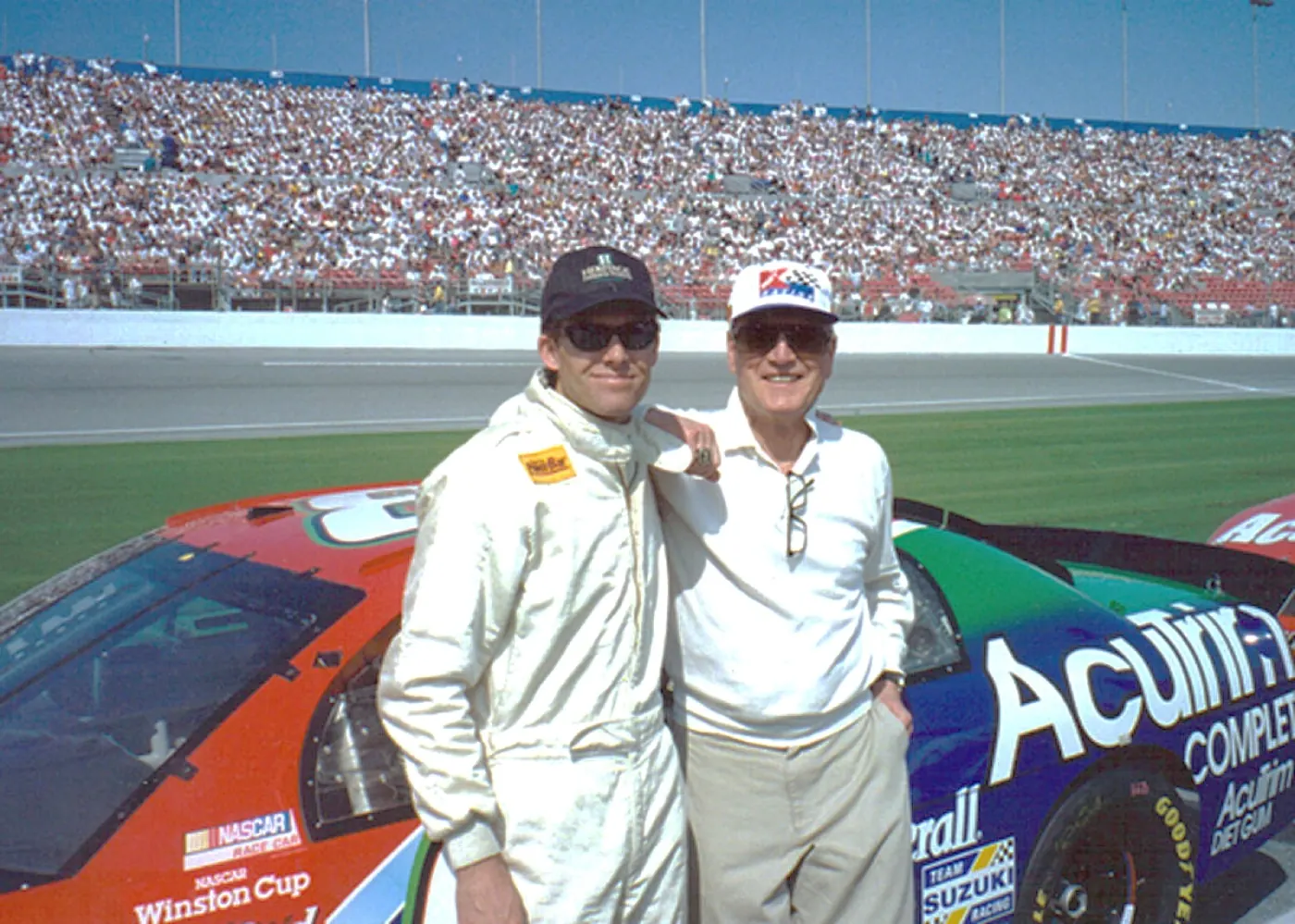
Of all your racing memories, which moment would you want playing on a loop?
The time I spent with Paul Newman, Chip Ganassi, and my dad at races. Many of those best memories are not about me racing. They are about being in a great environment with great friends. I also remember how amazing it felt to be at Daytona for the first time and to race there.
What is the wildest thing you have done behind the wheel that you can laugh about now?
It was probably related to film stunts, but I do not think I should answer that one. I would not want to be a bad influence or give anyone crazy ideas. I was a little bit crazy when I was younger.
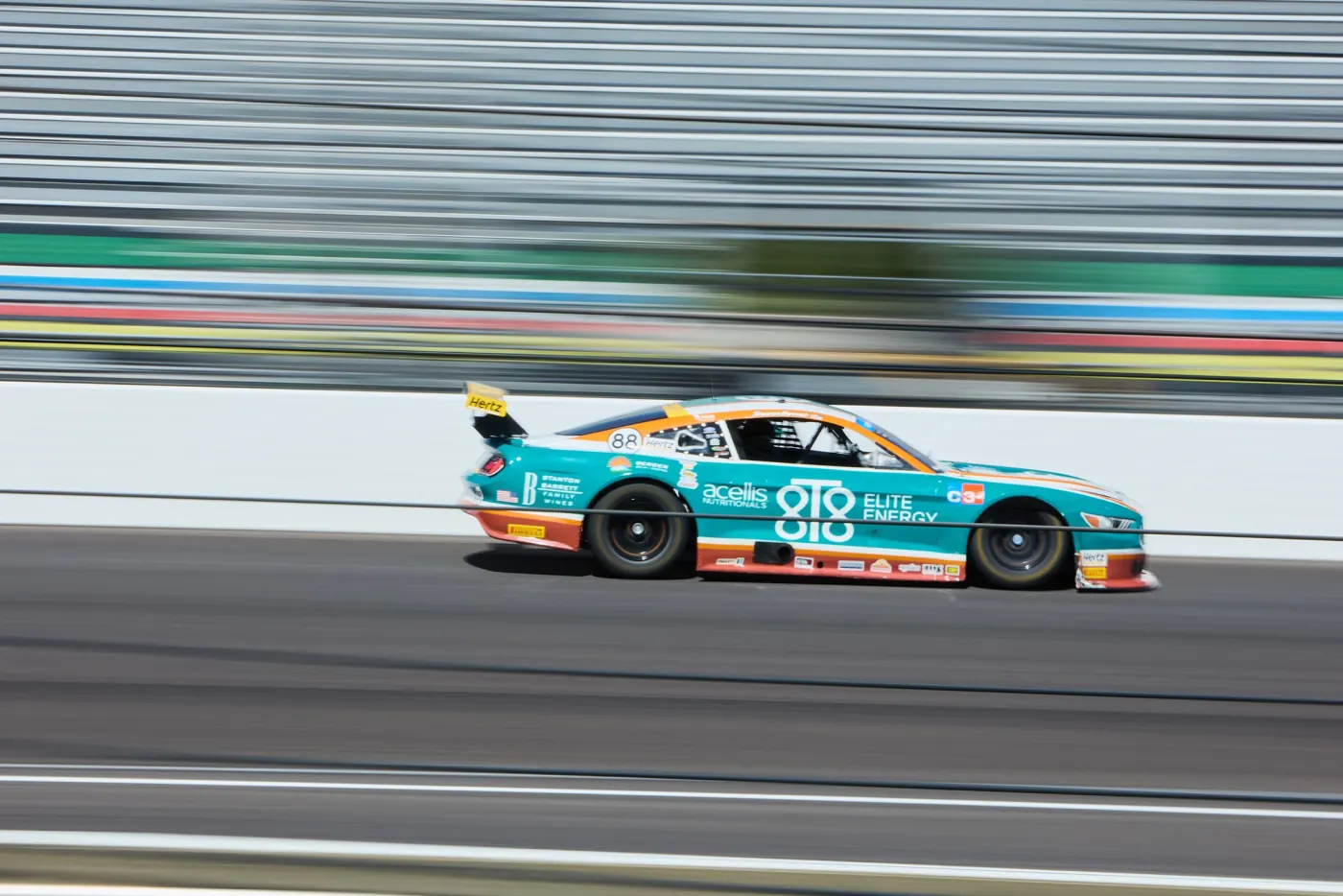
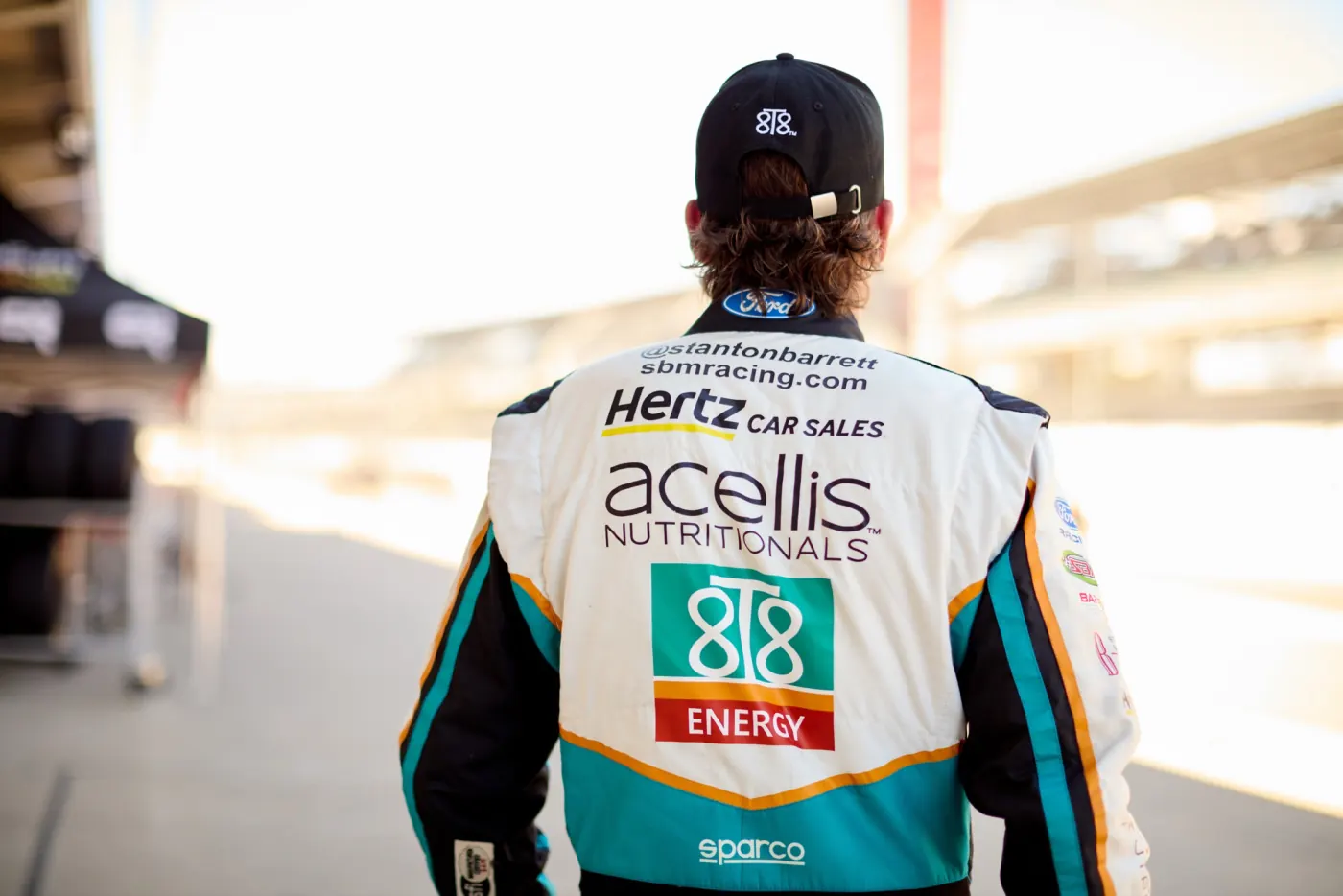
The highly modified, 560 horse-power V-8, Acellis 8T8 Ford Mustang.
03 Back to Trans Am
You returned to the Trans Am Series in 2026, this time in TA2. In your previous Trans Am appearance in 2017, you earned a pole and set the qualifying track record at Homestead-Miami. What brought you back?
Trans Am TA2 is extremely competitive and the races are at many of the great road-racing venues in North America. The cars are fun to drive, and I saw an opportunity to race a full season without the demanding schedule of NASCAR. I was also coaching a young driver with very little experience but a great deal of talent. I convinced him to race Trans Am too, which gave us the opportunity to field a two-car team at Stanton Barrett Motorsports. TA2 includes professional drivers from IMSA, WEC, NASCAR, and IndyCar, along with young talent being developed by manufacturers. It is a great place to race against very competitive drivers.
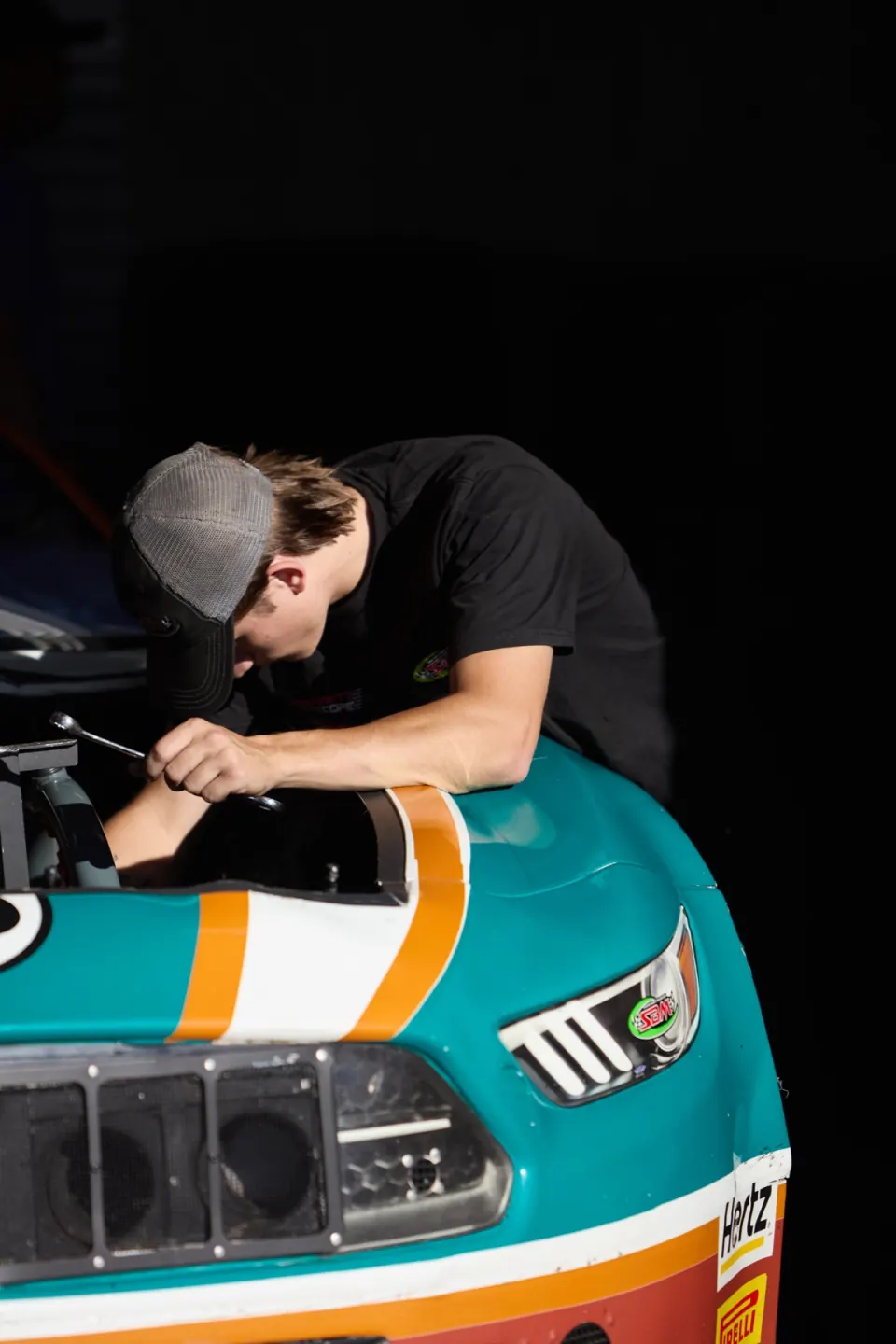
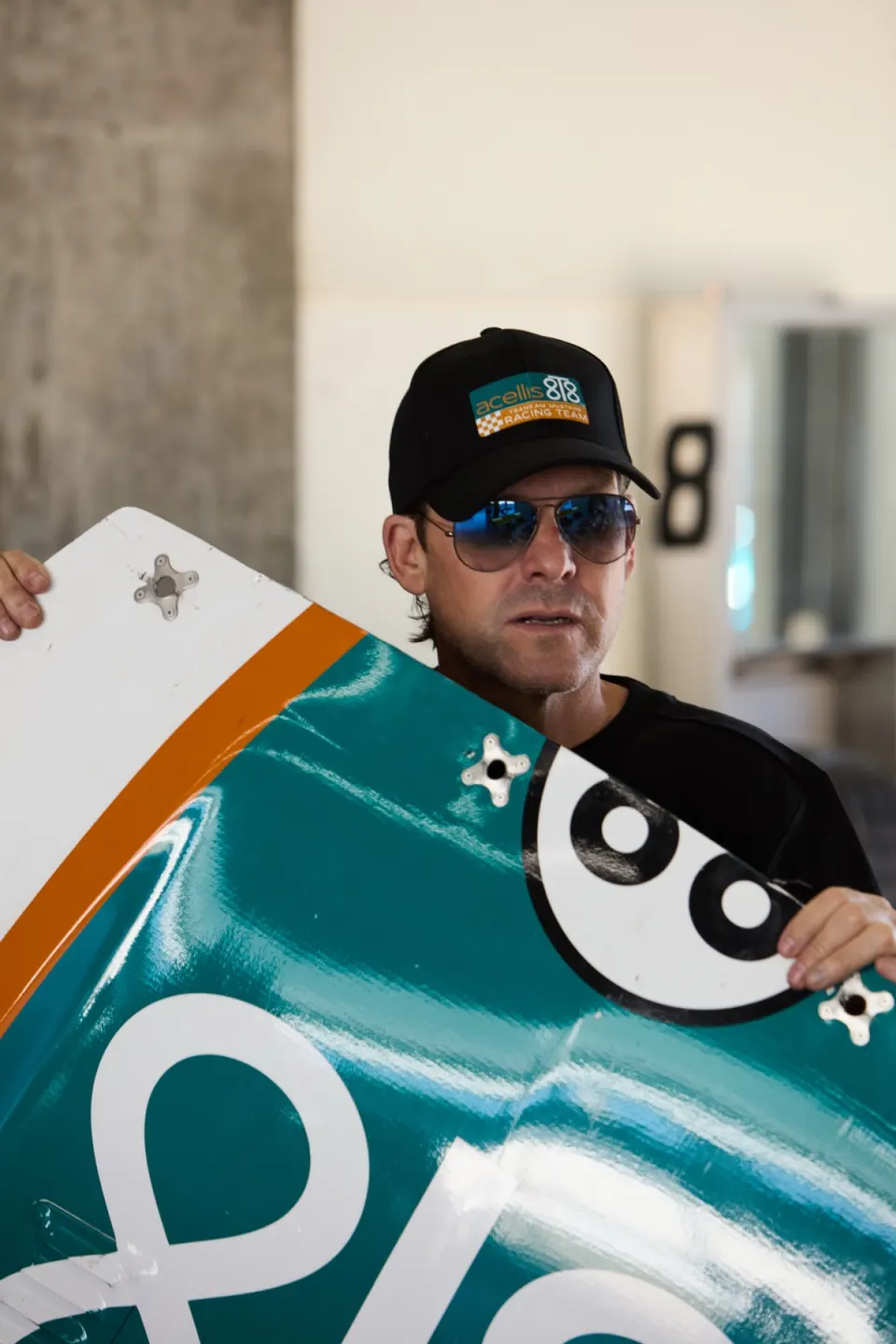
You are driving the highly modified, 560 horse-power V-8, Acellis 8T8 Ford Mustang. What makes the car fast?
The first key is doing the basics right. The rest of the formula is like Acellis 8T8: use the best ingredients and pay attention to detail. The rules are strict, but they vary by chassis manufacturer. Finding the right suspension setup is critical, and that setup has to fit each driver's style. These cars are complicated, with many variables you can change. The key is to remain focused on the path you believe in.
Use the best ingredients and pay attention to detail.On what makes a car, and a formula, fast
After decades in racing, what keeps the challenge fresh?
Passion. I love the sport, its complexity, and all the challenges of auto racing, from engineering and attention to detail to performing against the odds and competing with much younger professionals. I still want to test my abilities, mental capacity, sharpness, and belief that I can perform at a high level regardless of age. I have gained wisdom and experience over the years, and I use them to my benefit. Maintaining a healthy, active lifestyle keeps driving me forward.
You have moved from driving to coaching, directing, and team ownership. What does reinvention require?
Being myself, having a vision, and staying true to my passions. Relationships matter too. You have to maintain them, value the good people in your life, and remain grounded in your values.
04 Staying Sharp with 8T8
After 35 years of racing and more than 300 stunt credits, what does it take physically and mentally to stay sharp?
Mindset is the most important part. Then comes physical fitness and staying active through sports and activities that challenge reaction time, endurance, and mental capacity. Nutrition and the mental state you live in are key. Anything that can support those fundamentals is important.
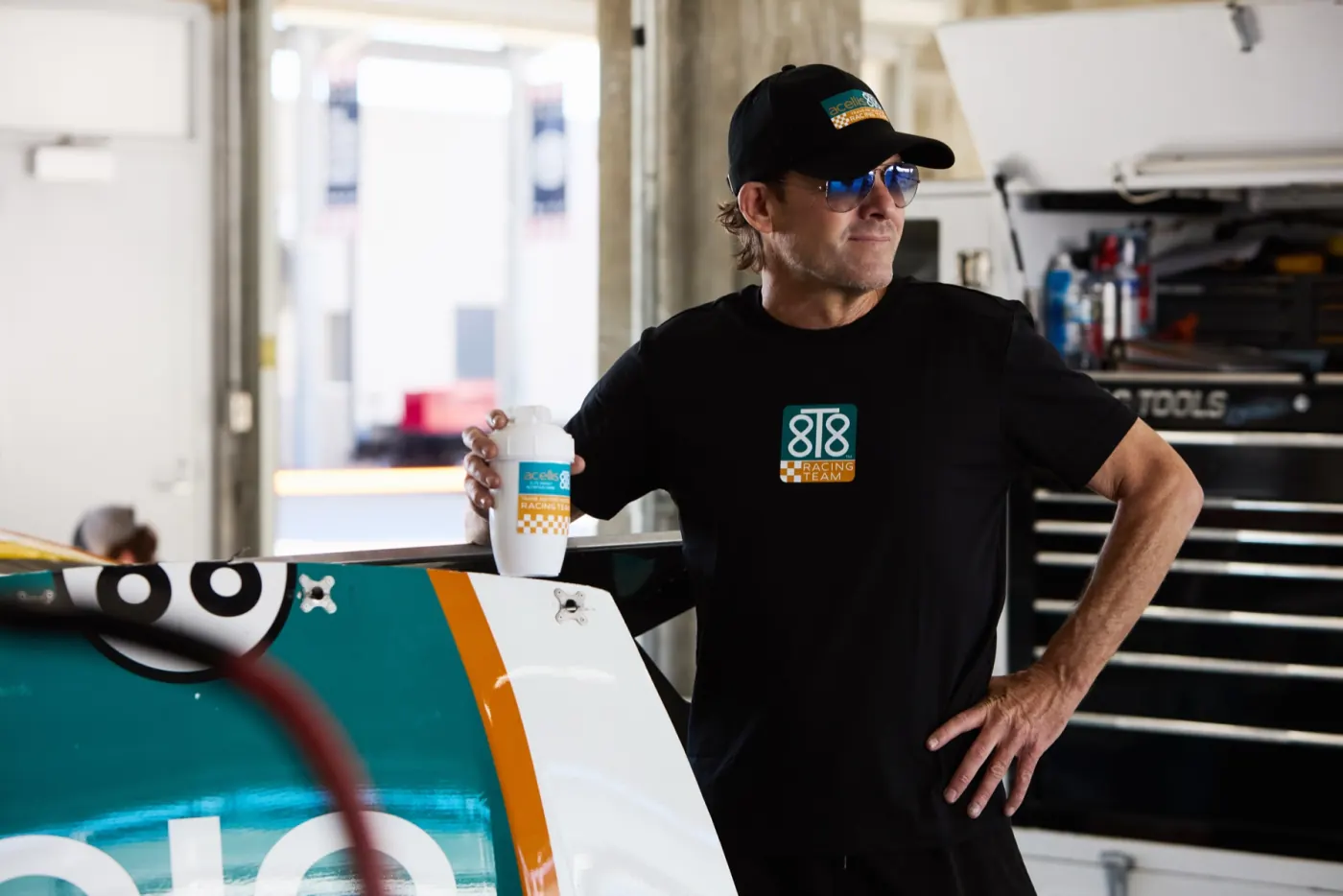
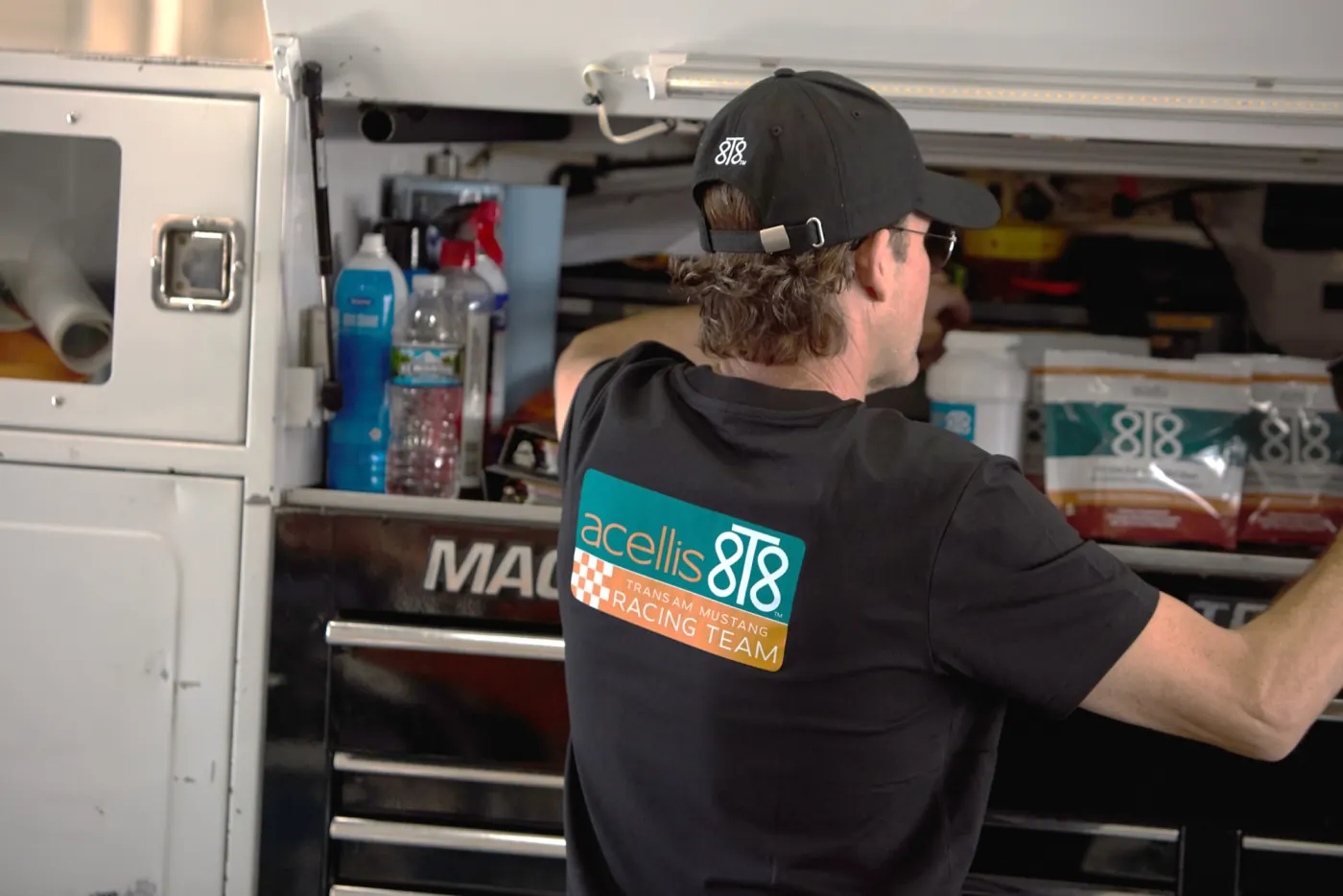
Along with enhanced energy and hydration, Acellis formulated 8T8 Elite Energy for sharp focus, fast perception, and decisive reasoning. How is it working for you?
For me personally, I am a huge fan of the 8T8 Energy Drink and how it supports me as a professional athlete in some of the most physically demanding sports like Motocross and Auto-Racing. I wouldn't use it if I didn't think it was the best energy drink for me. 8T8 gives me the enhanced, sharpened mental focus and physical energy along with the extra hydration that I need for several hours while racing. And there are no side-effects. I find that my body is extremely sensitive to supplements and I cannot take many of them. I am very confident in 8T8 and I know that has been formulated with the best combinations of ingredients.
No heavy sugar load, and none of the harsh stimulants other energy drinks lean on. Just sharpened focus, clear perception, and hydration that lasts.
You're right. 8T8 is not loaded with sugar and does not have any of the potent stimulants and additives like Guarana, Synephrine or Ephedra (ma huang) that other energy drinks have which can overstimulate your vital organs and life systems. Now a simple question, do you recommend 8T8 Energy for your race crew, plus your personal friends and family?
I do. I recommend 8T8 to everyone that I associate with. When they get to try the product, well – let me just say that they only they wished they would have tried sooner. There really isn't anything else in the market like 8T8, so I love sharing it with my team, my friends and my family. My dad loves it too.
Before racing, film stunts or doing an interview!On when he reaches for 8T8
OK, so when do you reach for 8T8 and why?
I reach for it about 20 minutes before I need the support of the most hydration possible – for those moments where I need to be at my very sharpest during extreme mental challenges and before I take on extreme physical activities, like the high-speed turning and accelerating through the g-forces I experience from racing. So, before racing, film stunts or doing an interview! (laughs)
“The danger was not the attraction. It was the challenge of doing something only a few people, or perhaps nobody else, could do.”
05 A Career in Stunts
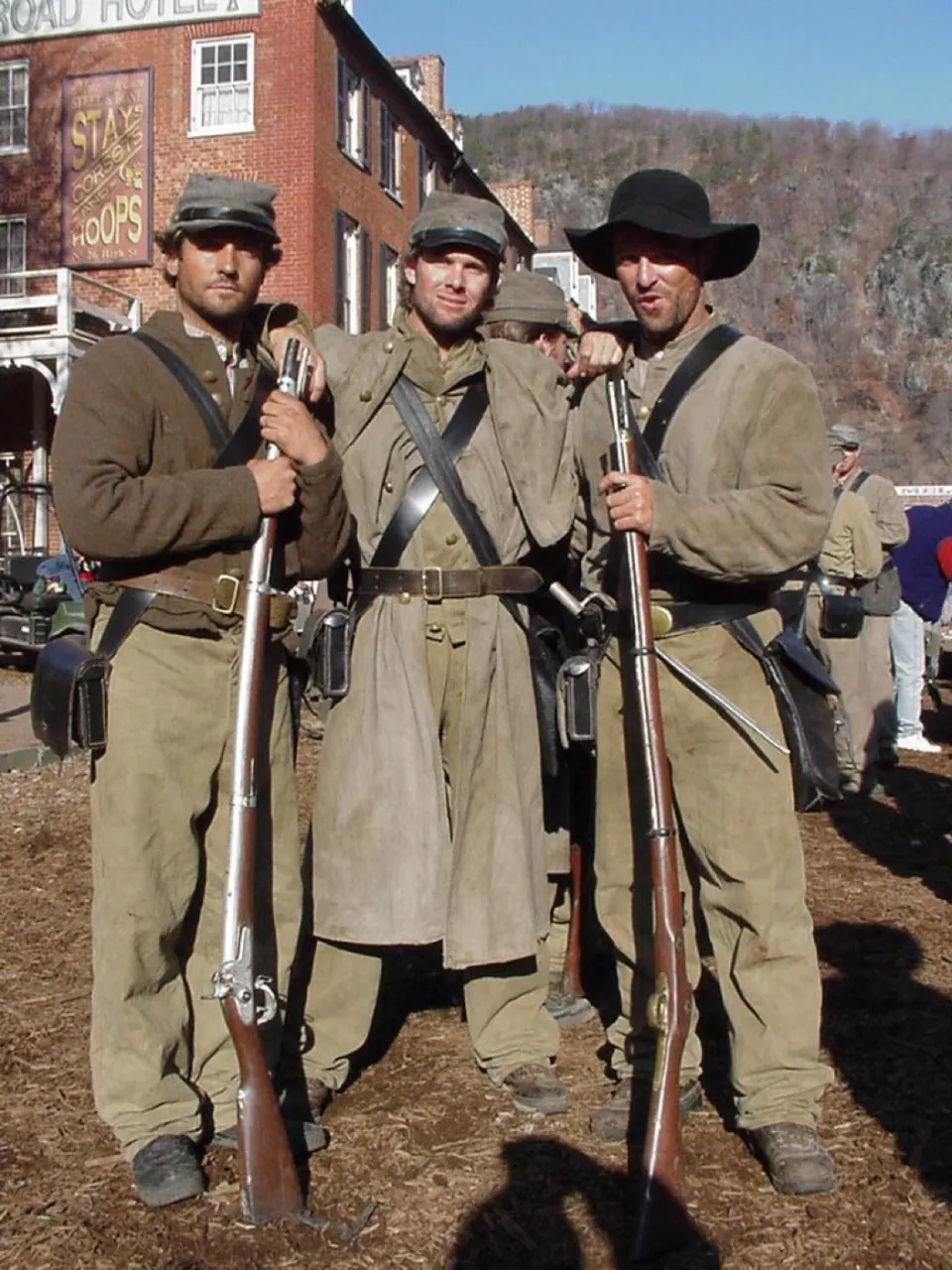
You have worked in so many high-profile films including Logan, The Lost World: Jurassic Park, Jurassic Park III, Spider-Man, Black Panther, Avengers, and Now You See Me. What kind of stunt work interests you most?
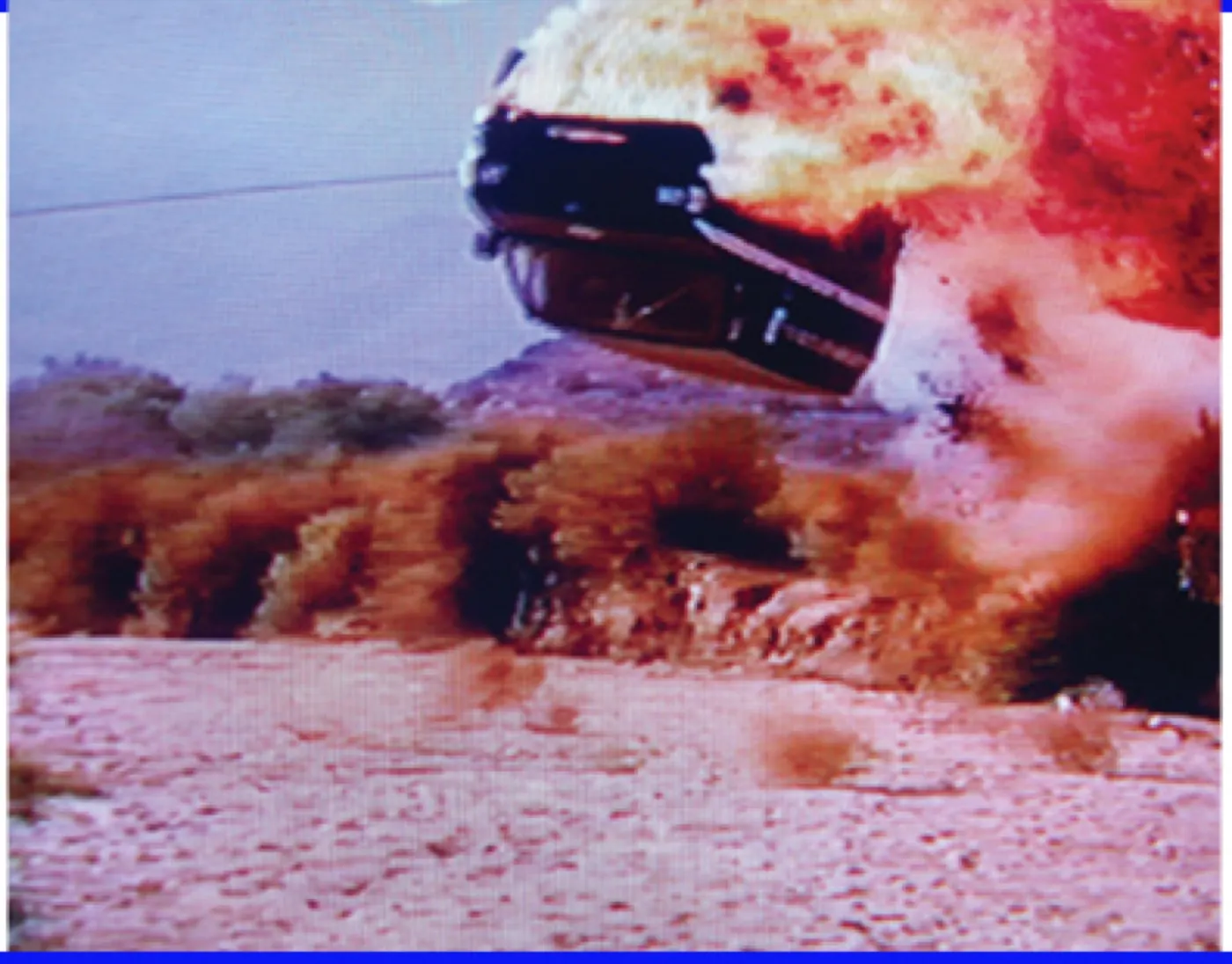
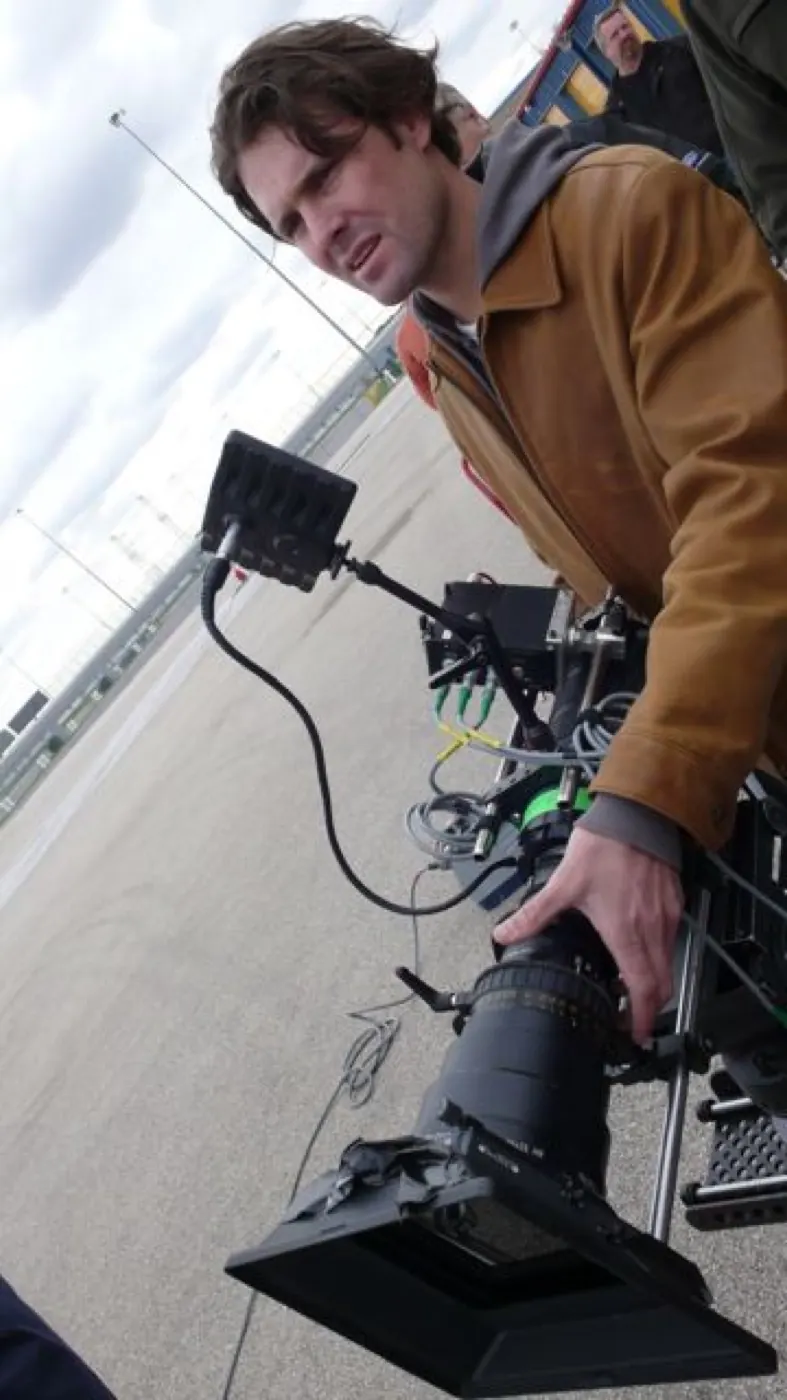
I have been doing it for 38 years and have more than 300 film and television credits. The fun is in engineering something complex and contributing to a successful stunt and film. I focus more on directing now, although I still work with friends I trust. When I was younger, the harder and more detailed work was the most rewarding. The danger was not the attraction. It was the challenge of doing something only a few people, or perhaps nobody else, could do. You have to engineer it, execute it under pressure, and understand the consequences if it goes wrong.
Of more than 300 film credits, which project makes you proudest?
I couldn't choose one. Every project has its own challenges and opportunities. I have been fortunate to earn the trust to perform some of the biggest stunts, to be respected by my peers, and to be called early for major productions. I am proud that I have upheld my family's legacy in the film industry.
What is one of your favorite stories from a film set?
I don't talk much about stories from work. My fondest moments were having the opportunity to work with my dad and brother for Hal Needham, or when all of us worked with Paul. Those are the best memories. Many stories still live inside me. Maybe one day I will write them down and share them, but it is hard to remember every detail because I tend to live in the moment.
What was your most dangerous stunt, and what made it work when it counted?
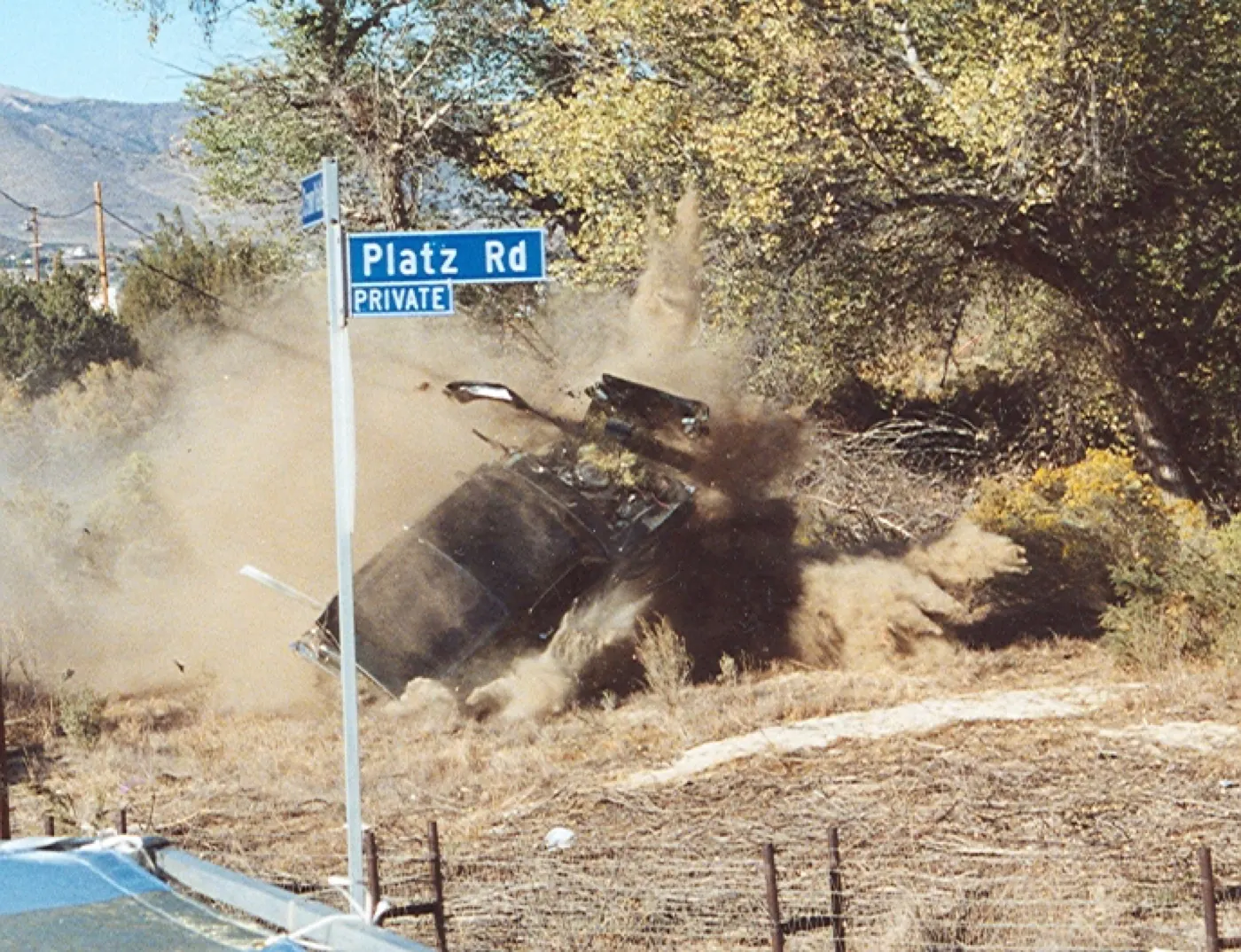
That is very difficult to answer. I have performed hundreds of dangerous stunts, including some I would not attempt again. Sometimes a stunt which looks simple - could be the most dangerous. If you can imagine something being done in a film, there is a significant chance I have done it or something similar. It is rewarding to look at the television guide on almost any day and find at least one film, often several, that I worked on.
If you can imagine something being done in a film, there is a significant chance I have done it or something similar.Stanton Barrett
06 Wine, Mountains & Life Beyond Speed
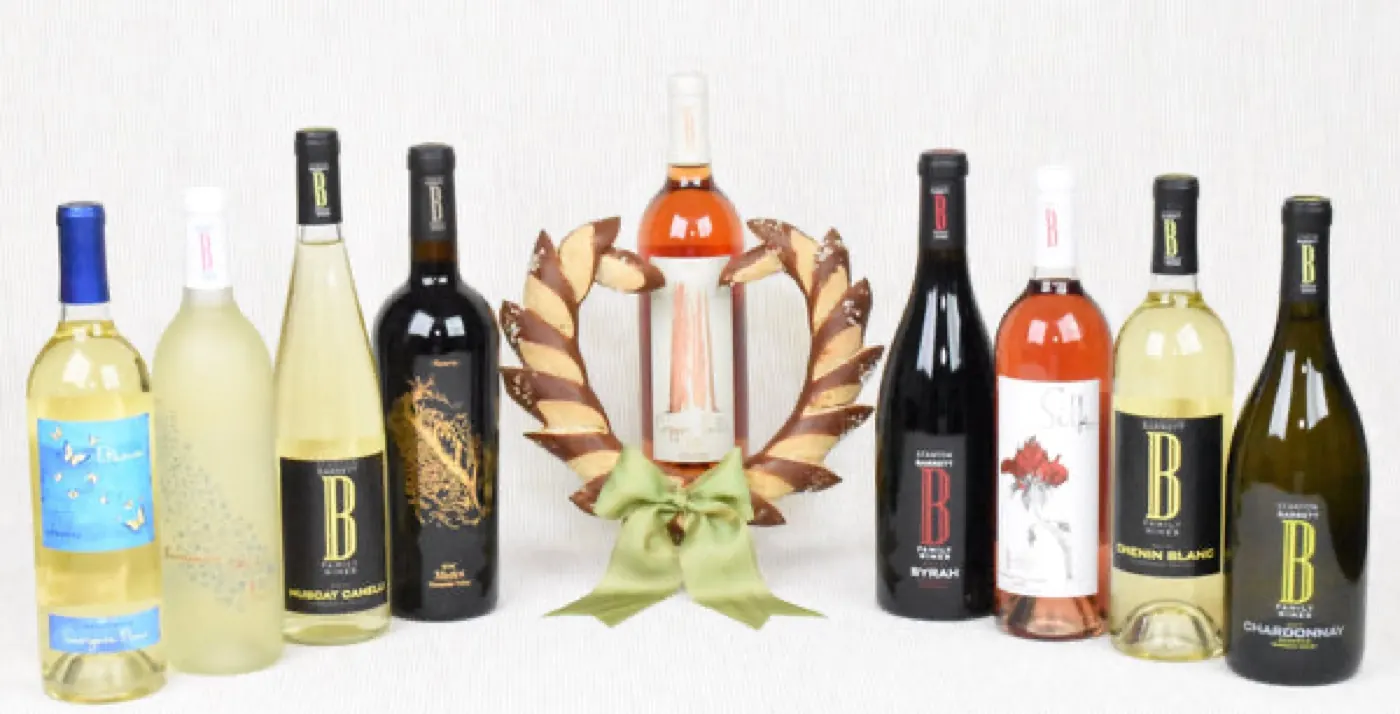
How did the Stanton Barrett Winery begin, and what bottle would you open to celebrate a win?
I started making wine in 2016. I have always been passionate about wine and culinary arts, and I love cooking and sharing that effort with friends and people I love. Cooking has to be shared in person, but wine lets me share something with patrons across the country. I work hard at it, spare no expense, and focus on quality through every step from winemaking to the finished bottle. We were very fortunate in 2018 - nine of the ten wines we entered in the San Francisco International Wine Competition earned medals, including a Double Gold. I design the labels and write the stories behind the wines because I want to bring the art of winemaking together as a whole. If I won the next race, I would open the Minarets Cabernet Reserve. The Minarets are beautiful peaks in a national park behind Mammoth Mountain. Those mountains and Mammoth have held a special place in my life since childhood.
07 Quick Takes

Live as though it could be one of your last days. Live life to the fullest, with good in mind.
Stanton Barrett's motto